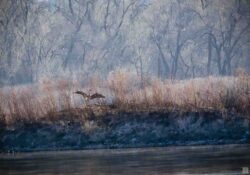
osprey in cottonwood

I am a retired professor of creative writing, a published poet and essayist who took up photography seriously during Covid, mining numerous Zoom, streaming, and in-person workshops along the way. I consider myself a “niche” photographer/writer and lucky: my photos have been exhibited, sold, published online—often accompanying my writing— and even won a couple of prizes. My latest book, This Visible Speaking: Catching Light Through The Camera’s Eye, is a hybrid photography/prose poem/prose book celebrating the small beautiful things within the South Platte riparian and the high mountain meadows along Phantom Canyon.


Introduction to my new Blog: In The Visible Speaking

 Dante called the most beautiful things of this world the visible parlare- the visible speaking. A friend said, “I imagine a blog from you within it, within the visible speaking, all these small moments of beauty and image you find through your poetry and photography. And to give it voice, to read your words out loud.”   So welcome to my new website and my new written and audio blog, In The Visible Speaking.

Click on the title of the post if you want to see the full sized image and any comments. And, please, leave your own.

author photo

Kathryn Winograd

Poet, Essayist, Photographer


  • A Recruiter, on Assignment for Meta, Emails me through Linked In about a Photography Knowledge Expert Position . . . and I Ponder

    A Recruiter, on Assignment for Meta, Emails me through Linked In about a Photography Knowledge Expert Position . . . and I Ponder

    A photograph is always invisible: it is not it that we see
    -Roland Barthes

    $60 an Hour for “nature/landscape Photographers” —for me— to take photographs of my “surroundings” with a camera or mobile phone.  
    Meta’s goal? To improve the AI's photo recognition abilities using high-quality photography.
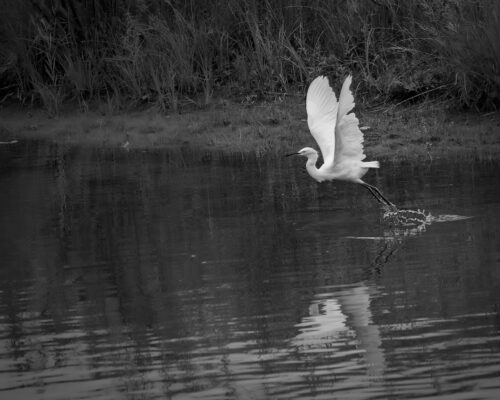
    Through my hard-won abilities. Through my long hours walking rivers nearby, through my incessant blunderings: swinging my camera toward ospreys and missing their lift from cottonwood nests. Hopelessly blurring the delicate river-drift of snowy egrets I searched for all summer.

    Two days ago, driving out of the declining suburban river way, not a bird sound in the leaden, too warm of a winter afternoon, I was thinking of a long-time friend winnowing down into a blur of hospice morphine. Then I saw the kestrel pinned against the sky.
    Its back and wing-folds turned to me, I almost did not stop.
    Too much, too much these days. Even in these “surroundings” of a curving asphalt drive, of a reservoir’s rocky bed, of a rabbitbrush shredding all its winter down. Why to stop my car and lean my camera on its rooftop to focus on a little bird? A little snag of shadow that cares so little for us who only walk this earth upon the bones of so many. (19 billion, to be exact, according to the same AI I am invited to service.)
    But I did stop.

    What would Meta do with this photo—a tiny spot of kestrel balanced on the tip of winter buds—a photo of sixty dollars an hour, “with negotiation room,” shot out of this grief I am feeling?
    “How many bones are in the heart?” my mistyping catches in a Google search.
    “Zero (0),” the AI Overview states. Our hearts’ tissue is connective and fibrous. Only the cow heart is capable of the “heart bone,” a bone, which does not exist, I am told, in the “healthy” human heart— this heart of so much winter, of so much rime, so much dust of snow.

    Here is my photo of the kestrel. I rendered it into black and white. I rendered it into wholly mine, though I will give it to you here, now:

    this fleeting second, this accidental beauty,
    when a small bird, a “thing with feathers,” turned to me
    and swayed upon a far river --that I could not see--
    like image and memory, song and poem.


    reading at tattered cover poster
    Reading at Tattered Cover East Colfax

Follow Me On Social Media